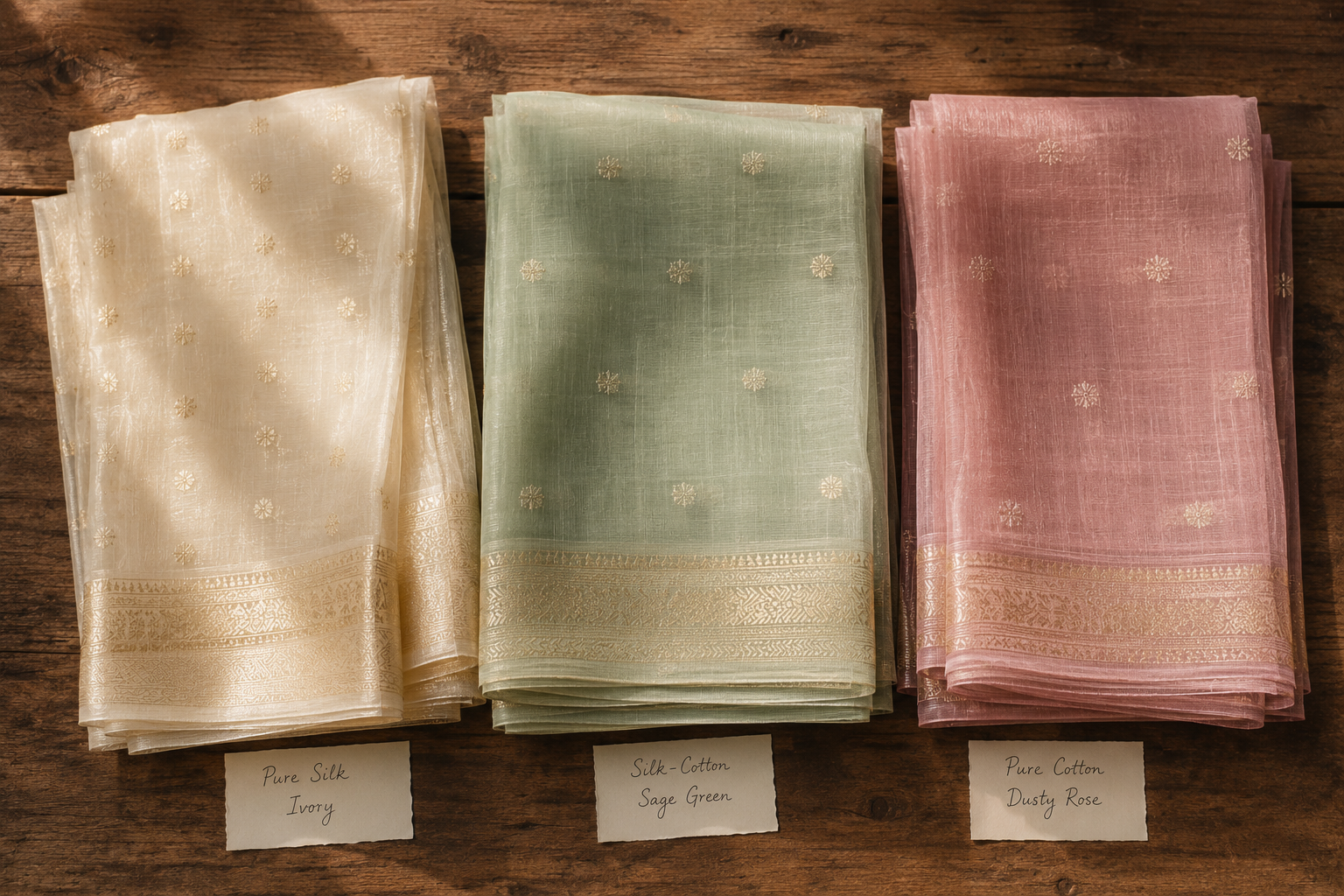
Kadwa, cutwork, jangla and tanchoi — the deepest guide on the site.
Korvai joins — body and border woven separately, then locked.
Tapestry pallu woven without a shuttle, motif by motif.
Sheer, glossy, and endlessly faked by mill copies.
Reversible borders — and a great deal of powerloom in the market.
Supplementary weft worked by hand against the warp.
Tie-dyed yarn before weaving. Check whether the ikat is printed.
Sixteen stages of resist and natural dye, both sides printed.
Thousands of hand-tied knots; the grid tells you the tier.
Pen-drawn or block-printed — the two are priced worlds apart.
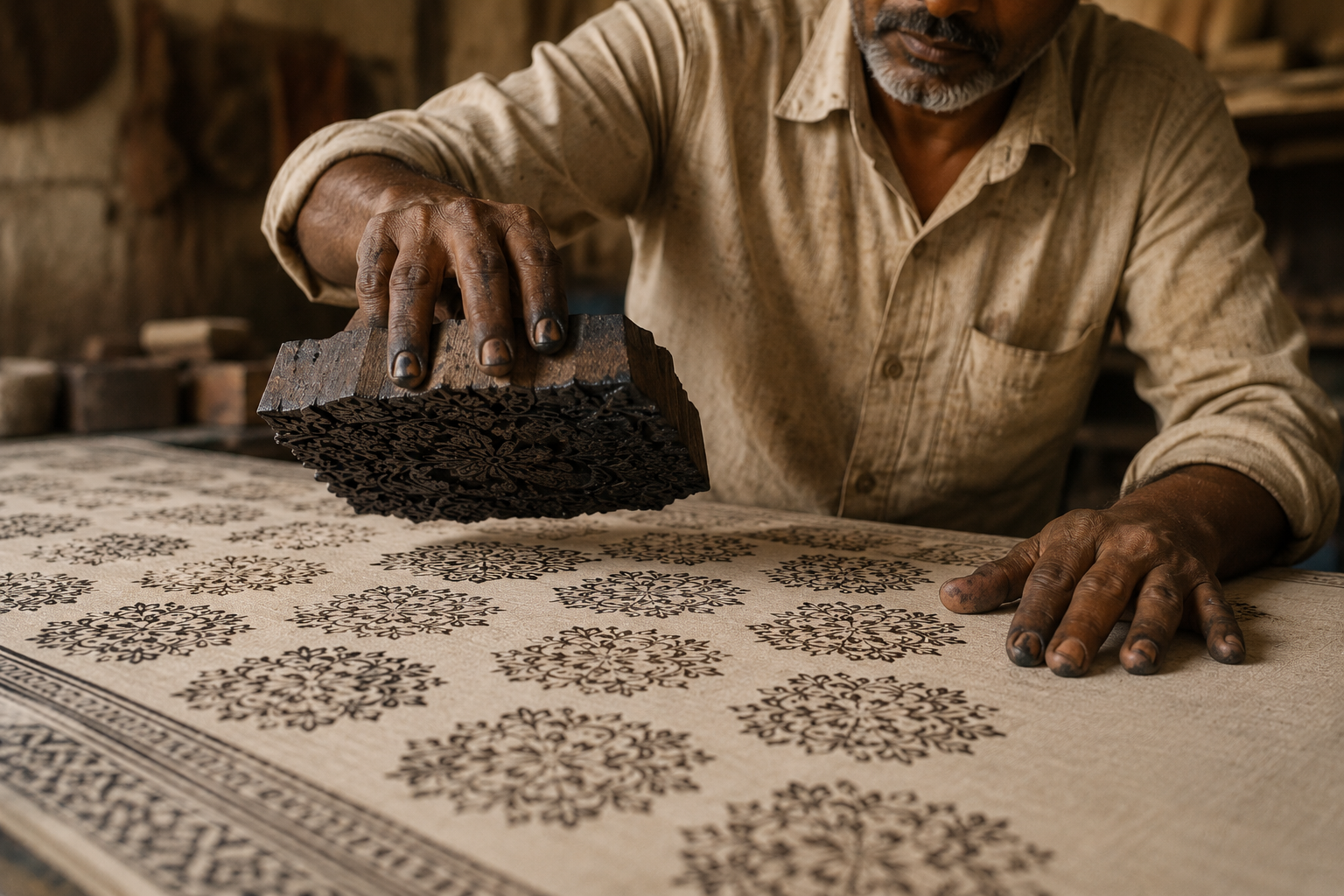
Not everything woven is woven.
Ajrakh, Bandhani and Kalamkari are surface traditions — the cloth is plain, the craft is in the dye. They are judged by different tests, and faked in different ways.
Read the print guidesThe Nakshapatta Edit
Monthly: one curated textile deep-dive, one styling idea, one thing worth buying, and one artisan to know. No noise. No ads. Just the best of Indian handloom, in your inbox.